Health & Home
After my knee replacement, my shoes became the hardest part of the morning
Told by the Nutelix team · 7 November 2026 · 3 min read

8:15 in the morning. I'm dressed. Coat on. Keys in my hand.
My shoes are on the floor, which is the whole problem.
I sit on the bottom stair, stick out a knee that doesn't bend much anymore, and reach.
Some mornings I win. Most mornings I sit there a minute and think about it first.
I own a shoehorn in every room

One by the front door. One by the bed. One in the car, for reasons I can no longer explain.
Then the sock aid, which works once you've practiced. Elastic laces, which my granddaughter threaded for me. A pair of slip-ons I don't trust on the stairs.
And the worst fix of all: waiting. Waiting for my husband, whose back is no better than my knees. Waiting for my daughter to come by on Saturday. Or giving up and walking to the mailbox in my slippers, hoping the neighbors are at work.
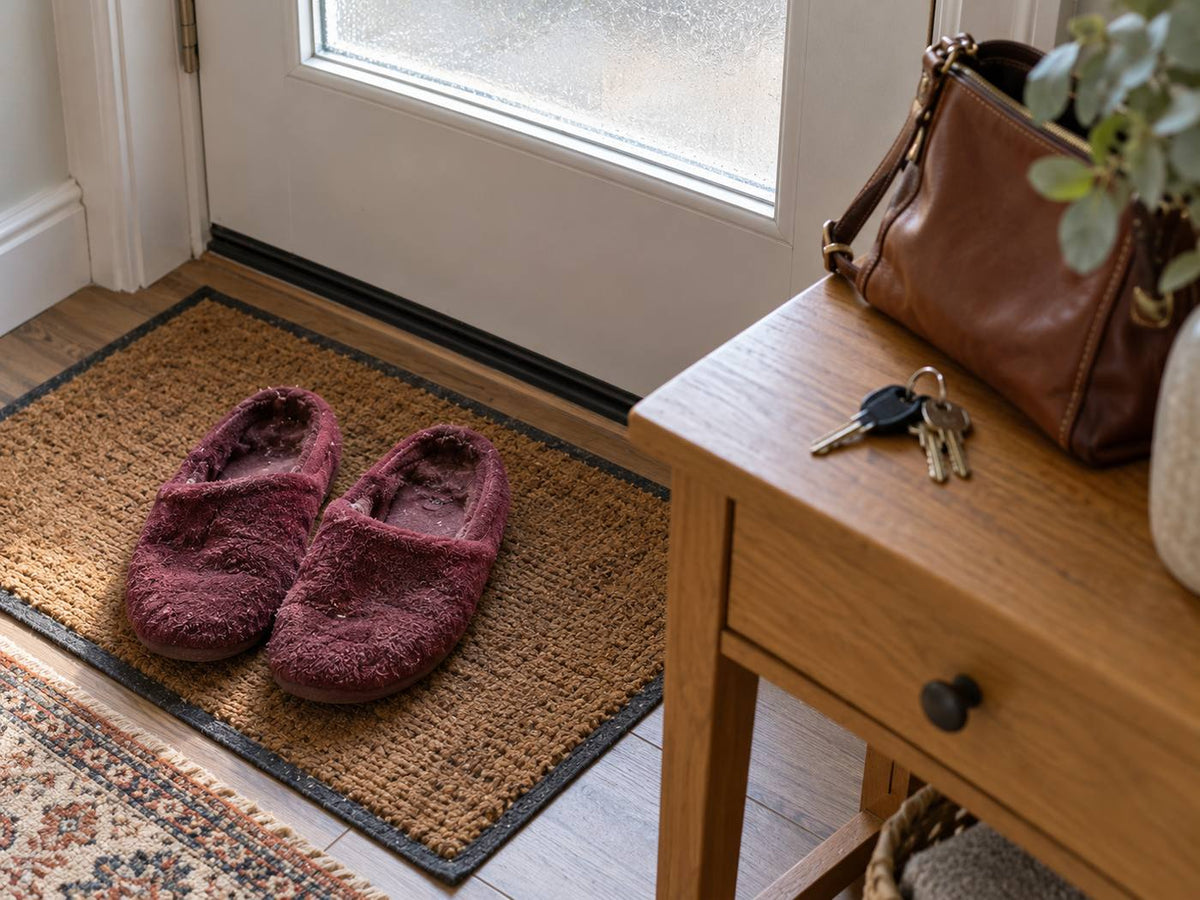
Every fix still ends with me reaching for my feet

It took me a year to see it. Every one of those fixes has the same weak spot.
Even the hospital leaflets hand you the same kit. US guidance for after hip surgery says to use "a long-handled shoehorn, elastic shoelaces, and an aid to help you put on your socks" (MedlinePlus, NIH), and to wear slip-on shoes "with a lip in the back or a closed back" (Hospital for Special Surgery). A closed back, without the bending. That was the shoe nobody handed me. And I'm hardly alone: more than 700,000 knee and 450,000 hip replacements are done in the US every year (AAOS).
- No: Laces need you to reach your feet. Twice.
- No: Slip-ons need you to force your heel in, and then they slide off on the step.
- No: A long shoehorn is just a longer way of bending.
Then my daughter sent me a link
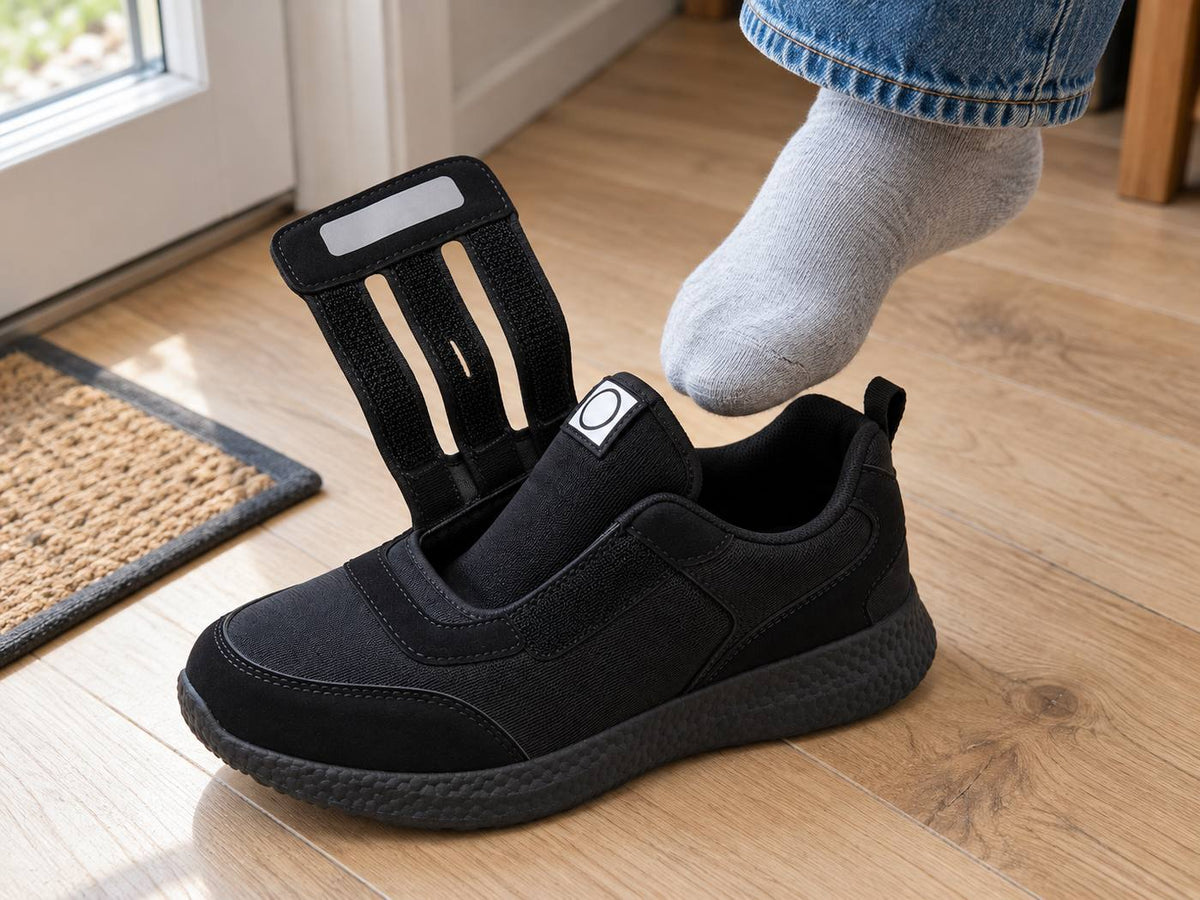
It looks like a normal sneaker. Then you lift the strap, and the whole top folds back. It opens about twice as wide as a shoe with laces.
So I don't fight it anymore. I sit in my kitchen chair, set my foot down flat, and it goes in. No forcing the heel. No shoehorn. No stair.
How I put them on now, sitting down

- Lift. I open the strap with the shoe on my lap, then set it on the floor in front of the chair.
- Step. Foot down flat and straight in. My knee stays where it's comfortable.
- Press. Fold the strap over and press it shut with a flat hand. No bow, no knot, no pinching.
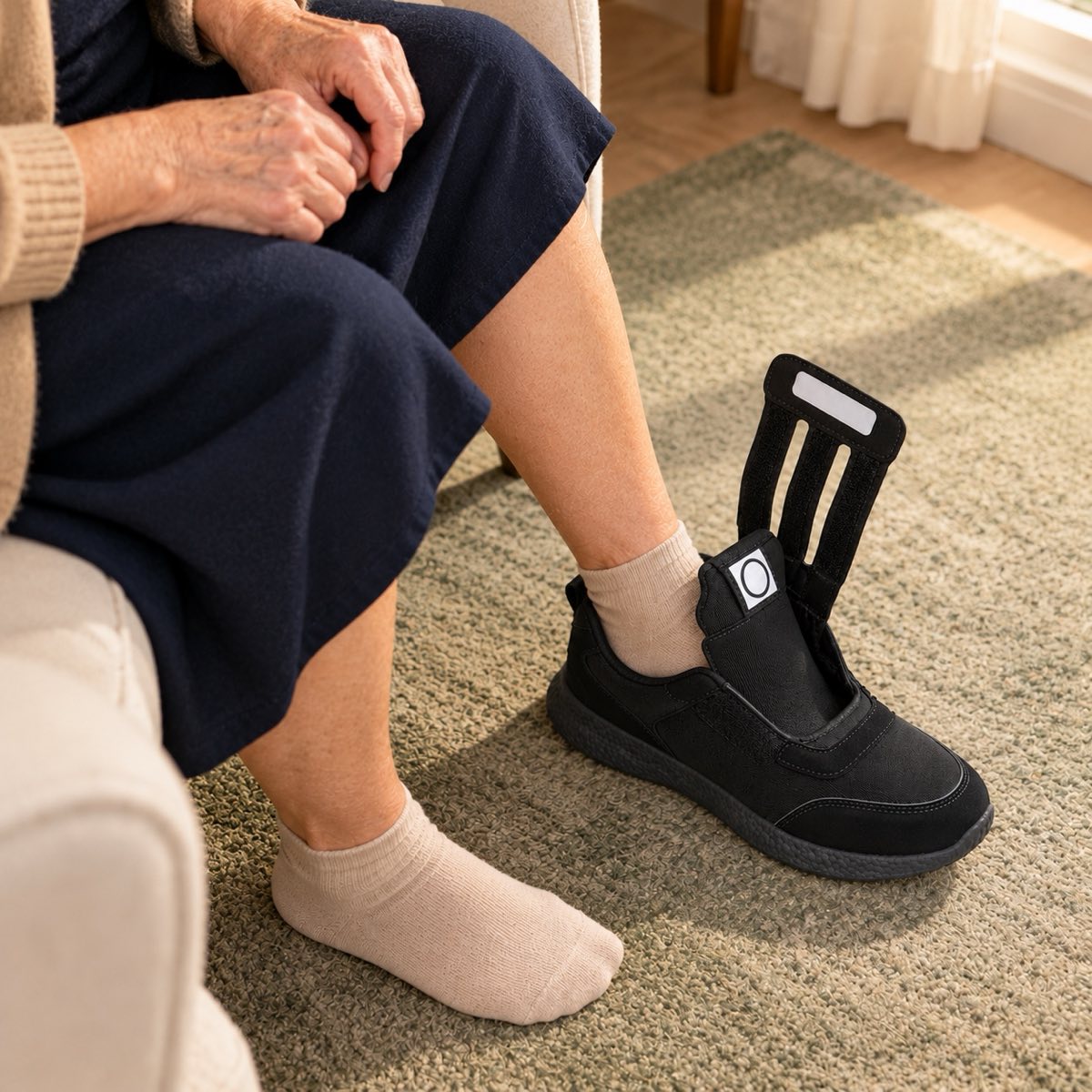

I still reach down once, to press the strap. Once. Not the ten-minute wrestle.
Coat, keys, shoes, door. In that order, by myself.

I walk to the car in real shoes. I get the mail in real shoes. No slippers in public, which my neighbors may or may not have noticed.
Nobody has to come over to help with my feet. That was the part I minded most, if I'm honest. Not the knee. The asking.
They look like sneakers. Not like a hospital gave them to me.
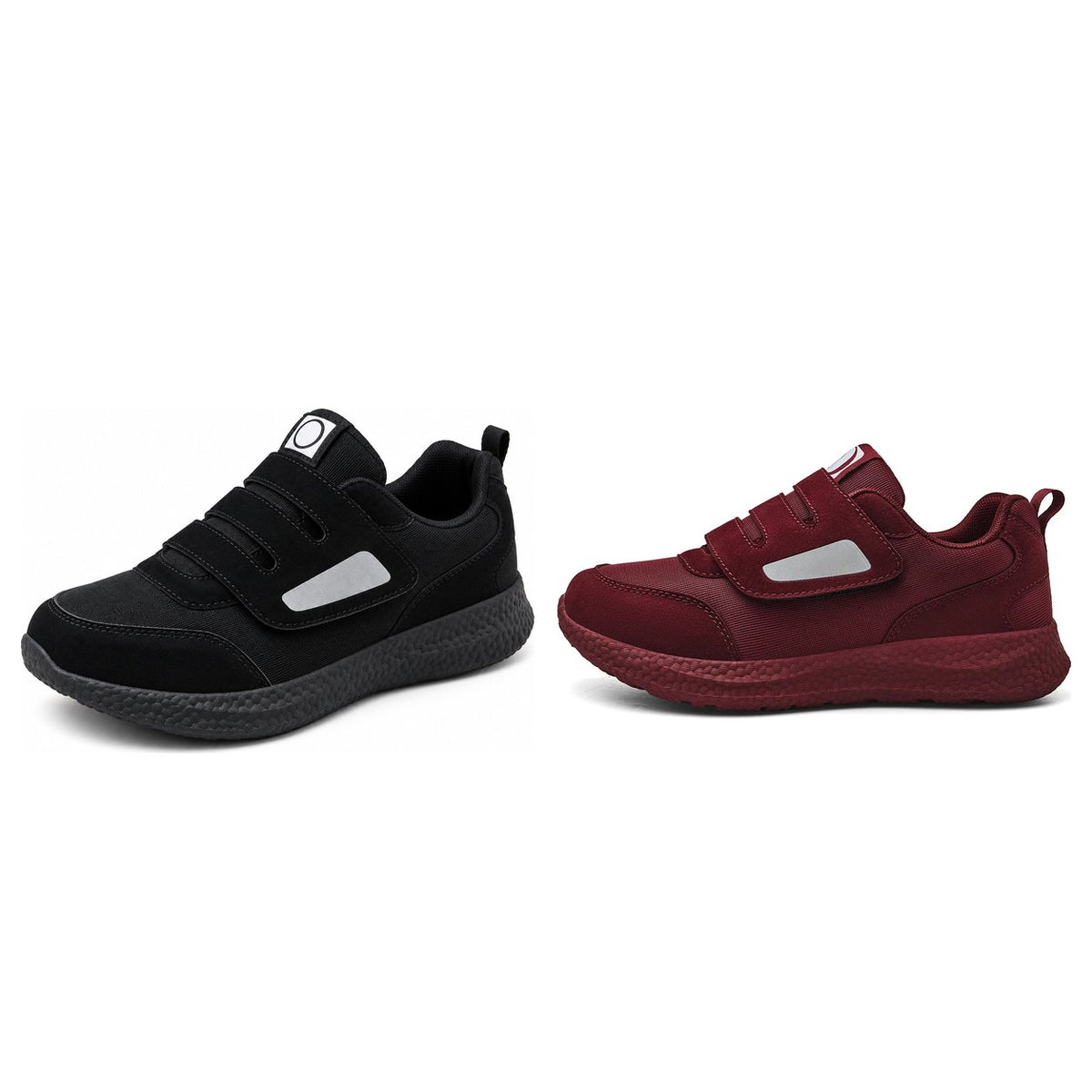
Black or maroon. The strap sits where laces would be. A friend at church asked where I got them. She didn't ask why.
The details, for the people who read labels (me)

$79.95, with free US shipping.
- Opens about 2x wider than a laced shoe, so the foot goes in flat
- Widths D to 6E, so a wide foot isn't squeezed
- US women's sizes 5 to 14. I ordered my normal size
- About 450g for the pair, light in the hand
- Thick foam sole and a low, wide heel with a firm back
- Closed back, so it stays on like a real shoe, not a slipper
Tomorrow at 8:15, sit down and put your shoes on.
Free US shipping, 3 to 5 days. Wear them for 50 days: to the car, to the store, to church. If they're not for you, you get every cent back.

Nutelix EasyWrap Adjustable Shoe
The whole top opens about 2x wider, so your foot goes in flat while you sit. Then one strap presses shut with a flat hand. And it looks like an ordinary sneaker.
- Opens about 2x wider: foot in flat, no forcing the heel
- Put on sitting down: lift, step, press
- Closed back, low wide heel: stays on like a real shoe
- Widths D to 6E, US women's 5 to 14
Opens up to 2x widerRoom to set your foot straight in, then closes snug again in seconds.
- Free US shipping, 3 to 5 days
- 50 days to return
- Secure checkout
Before you order
What size should I order?
Can I put them on without bending?
I've seen shoes like this before. What's different?
Only sold here. Not on Amazon, eBay, Etsy or any other platform.
P.S. Tomorrow at 8:15 my coat will be on, and so will my shoes. It only took me two knees and a lot of shoehorns.
Questions readers ask
Can I wear them after hip or knee surgery?
Ask your surgeon or physical therapist what you're cleared to do. EasyWrap is an everyday sneaker, not a medical device. What it changes is the putting on: sit down, foot in flat, one strap.
Will they stay on?
Yes. It's a closed-back sneaker with a firm back and a strap across the top of the foot, not a slip-on, so your heel sits in the shoe.