Living with Parkinson's
Putting on shoes got harder with Parkinson's. Here's the fix: change the shoe, not you.
By the Nutelix team · Updated 28 October 2026 · 6 min read

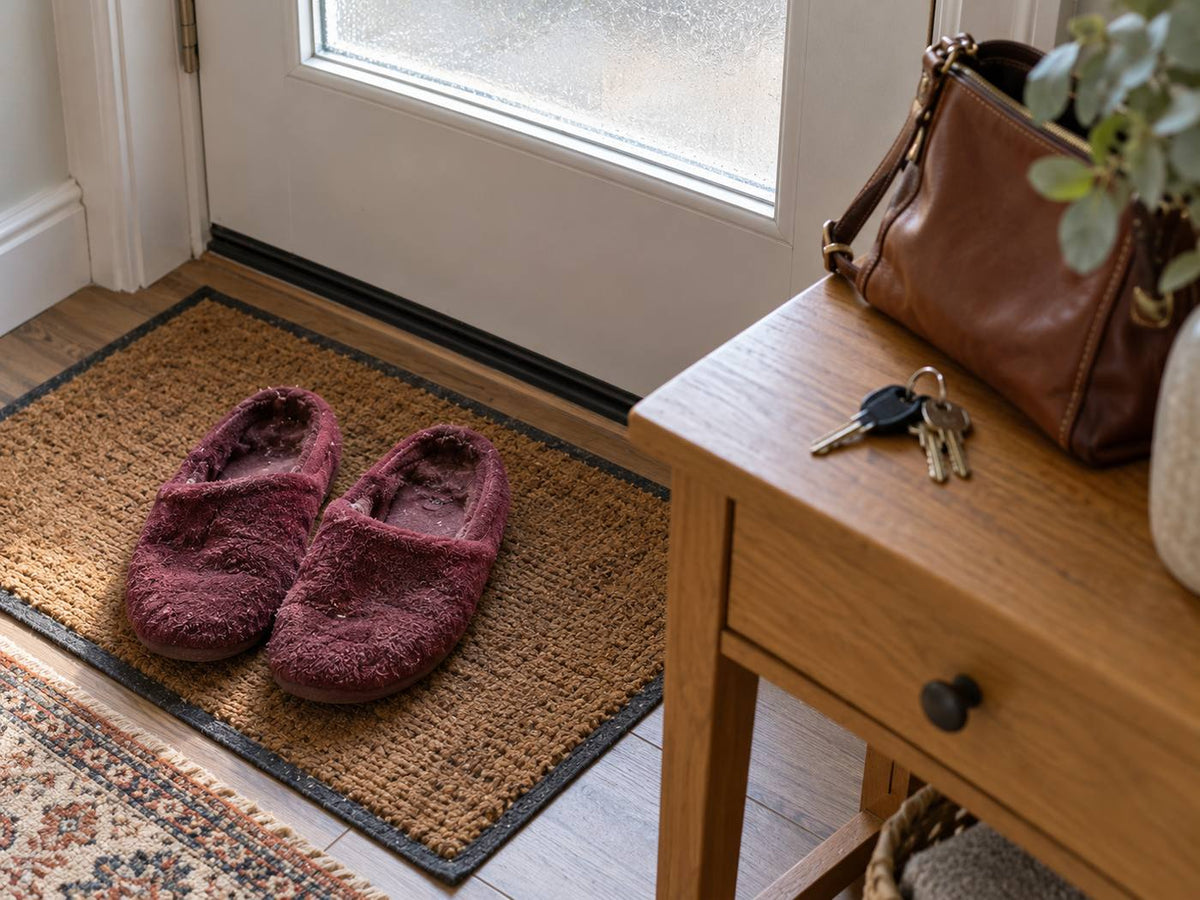
Laces need fingers that cooperate.
Slip-ons slide around.
"Easy" shoes look medical.
Here is what Parkinson's groups and researchers say to look for, and the everyday sneaker built around their list.
Some mornings your body is ready before your hands are

The coffee is made. The coat is on the hook. And then there are the shoes, sitting by the door like a small test you did not ask to take. Fingers that worked fine at dinner fumble the laces now. What used to take ten seconds takes ten minutes.
And you would still rather do it yourself: the American Parkinson Disease Association notes that "most patients feel more comfortable dressing themselves, even though it may take longer to do so."
You are far from alone. About 1.1 million Americans live with Parkinson's (Parkinson's Foundation). Almost 60% of people treated for it have trouble moving in the morning, before their first dose has worked. And about half experience freezing of gait (50.6% in a review of 9,072 patients), with doorways and time pressure among the known triggers. The front door, in a hurry, is the hardest place to be stuck with laces.
Laces were never designed for your hands now

A bow knot is one of the most demanding things you ask your fingers to do all day: pinch, loop, hold, pull, and do it again on the other side. The American Parkinson Disease Association puts it plainly: "The fine hand coordination and strength needed for buttoning and zipping clothing fasteners is sometimes impaired in people with Parkinson's."
In a study of 89 people with Parkinson's, 64% had at least some problems putting on their footwear, and 65% had given up dress shoes altogether because of the discomfort. Those who struggled were far more likely to prefer shoes without laces (75% against 45%).
That is not a lack of effort. It is the shoe asking for something your hands find hard right now.
Easy versus secure. Most shoes make you choose.

So people do the sensible thing and switch to slip-ons. Then a new problem shows up.
The Michael J. Fox Foundation warns that shoes "that slide on and off" "may not provide enough stability." Parkinson's UK says shoes with "laces, velcro or a strap and buckle will have a better hold on your foot than a slip-on shoe." Slippers get the same warning: the Parkinson's Foundation says they "can slide off your feet."
In a UK study of 218 people with Parkinson's, 56% said a secure fastening was important in an outdoor shoe, yet 35% wore slippers indoors.
What research says about shoes and falls
Falls are the part of Parkinson's nobody likes to talk about. The Parkinson's Foundation puts it plainly: "Around 60% of people with Parkinson's disease (PD) fall every year." So researchers have looked closely at what people wear on their feet.
- Slippers, socks and bare feet. In a Boston study of 765 older adults, 51.9% of falls at home happened in slippers, socks or bare feet, though only 10.1% of people usually wore them.
- Sneakers. In a study of 654 older adults, "athletic and canvas shoes (sneakers) were the styles of footwear associated with lowest risk of a fall."
- Fastening. In the same UK survey, which also included people after a stroke, those who had fallen "placed a particular emphasis on ease and security of the fastening": 57% rated a secure fastening important, against 42% of those who had not.
- Heel height. "An elevated heel of only 4.5 cm height significantly impairs balance in older people."
We have not tested whether any shoe changes your risk of falling, and the EasyWrap is not a fall-prevention device. Talk to your doctor or physical therapist about falls.
Meet the EasyWrap, built around that list
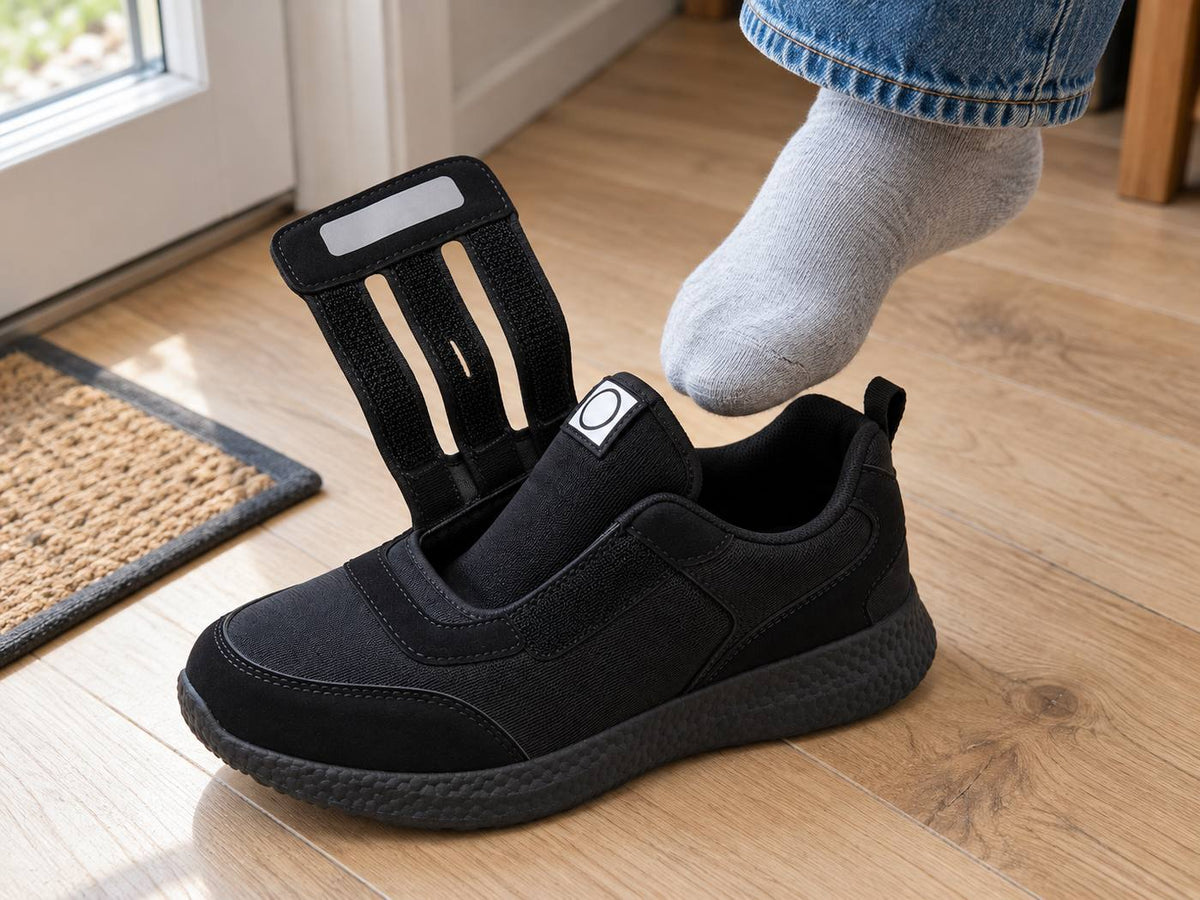
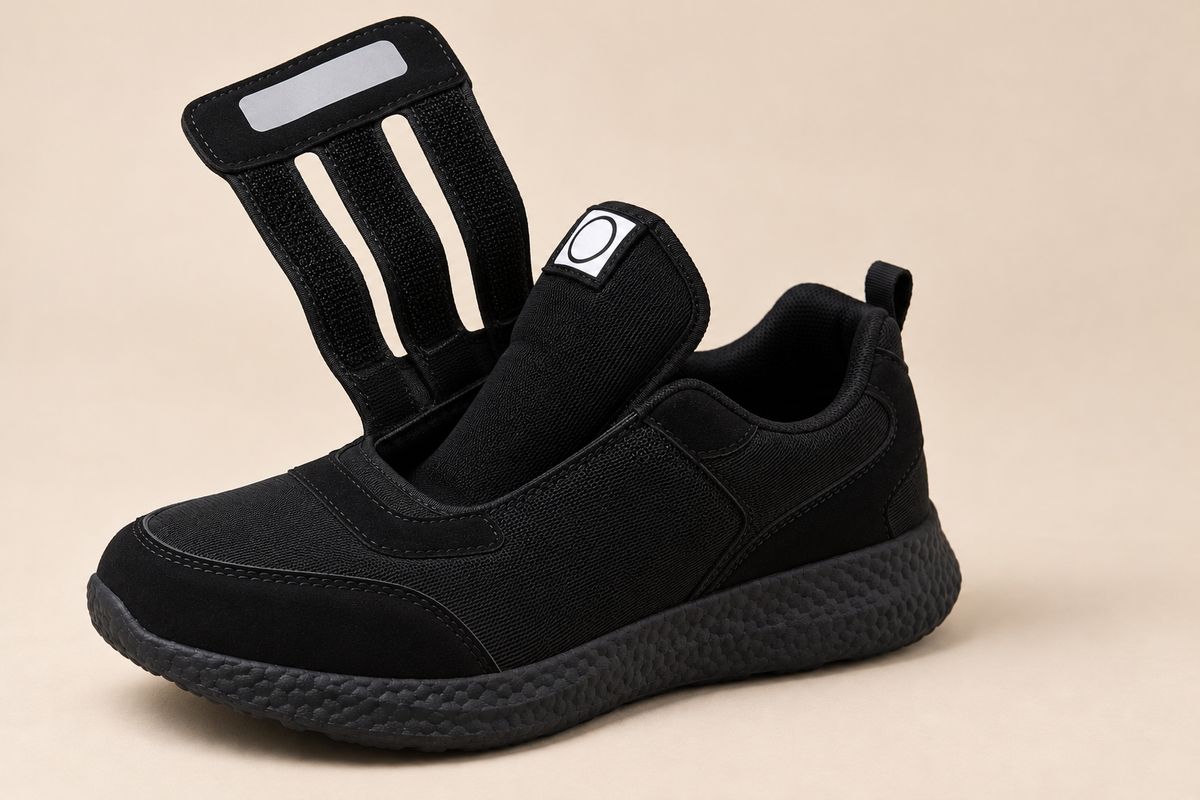
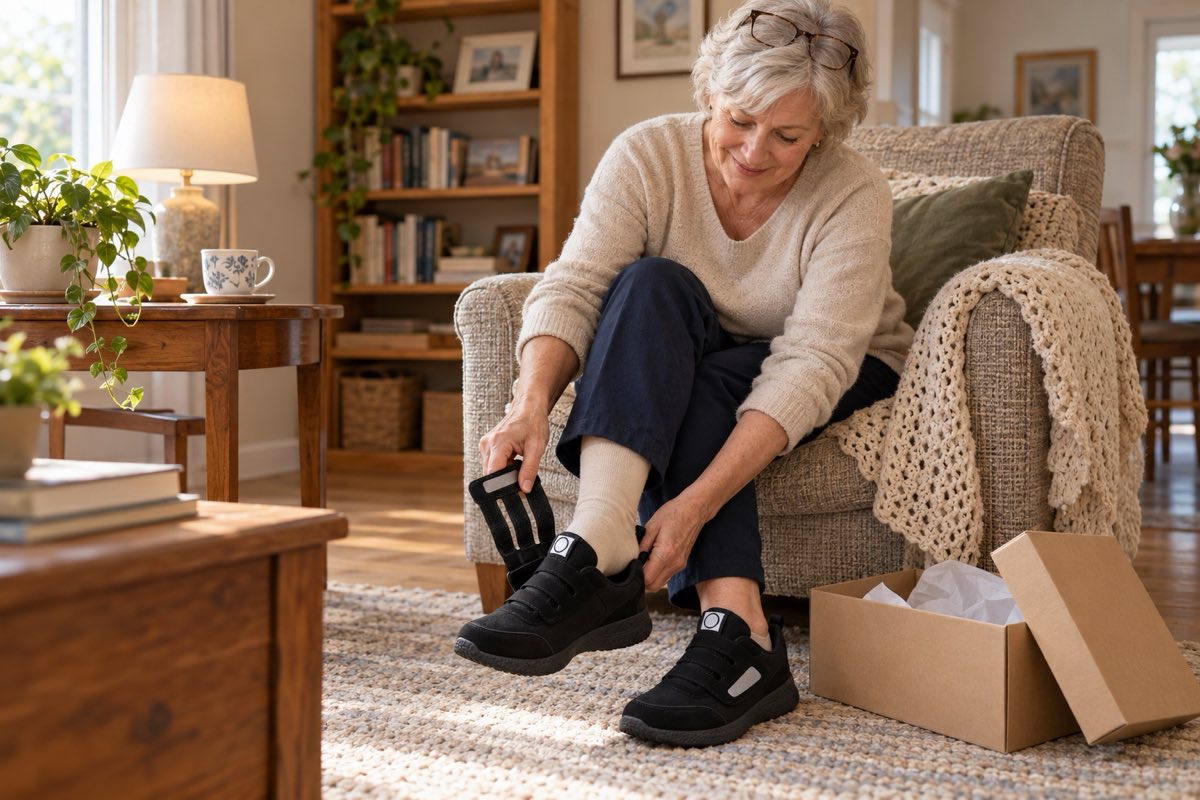
The EasyWrap is an everyday sneaker with one wide hook-and-loop strap instead of laces: three straps joined into one wide panel. Lift it and the opening gets up to 2x wider. Point for point:
- A low, wide heel. Exactly what Parkinson's UK asks for, with a firm heel at the back.
- Fastens over the top of your foot, close to the ankle. One wide strap holds your foot from above. It is not a slip-on.
- A Velcro-style closure you can do with one hand. No laces to tie, nothing to thread.
- Lightweight. About 450g for the pair.
- Room for your toes. A deep, extra-wide toe box, so toes are not "cramped," and room over the top of your foot.

How it goes on (sit down first)

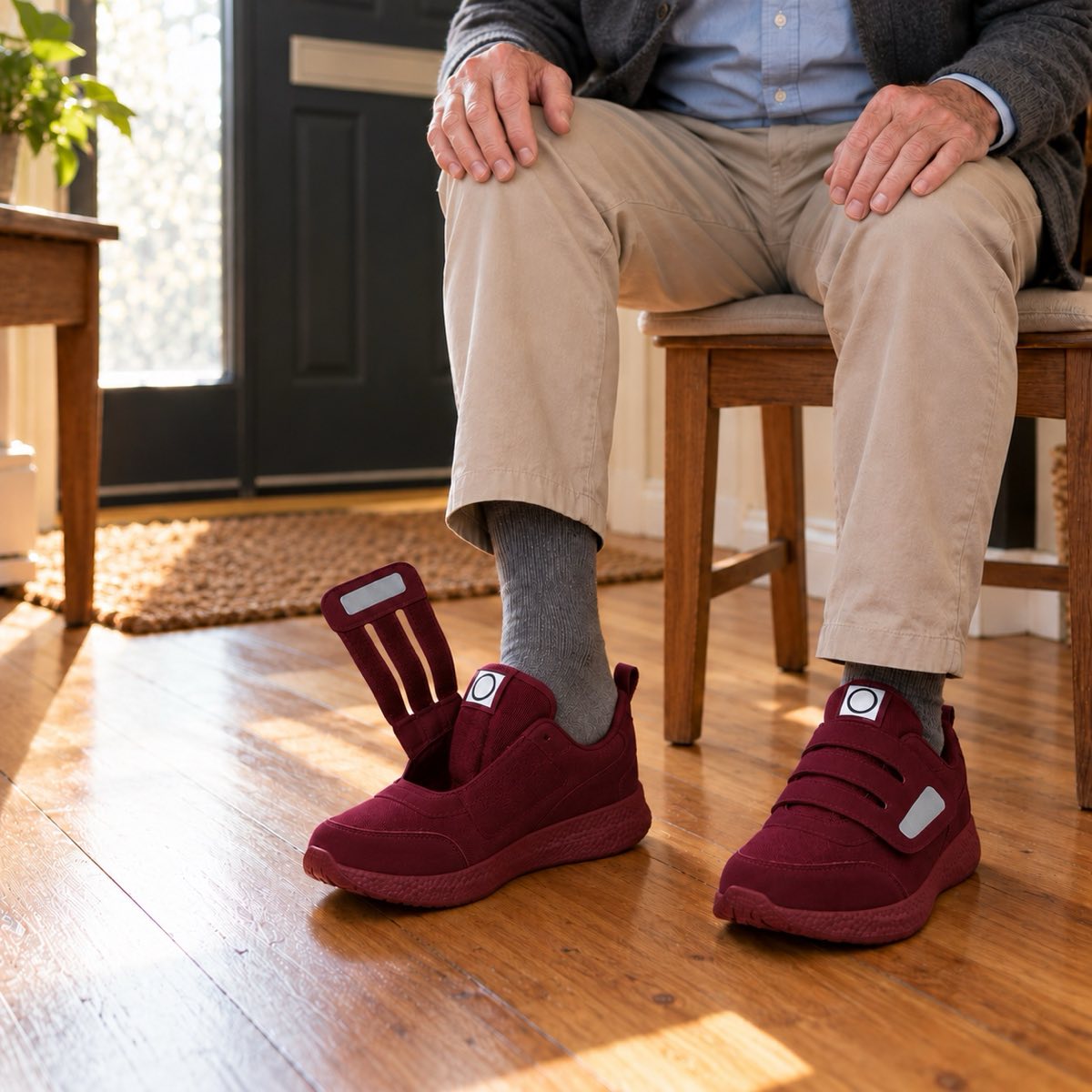
The Parkinson's Foundation's advice starts simple: "Sit down when dressing." Choose "a chair with firm support and arms." From there, the EasyWrap takes three steps.
- Lift the strap. It folds all the way back and the opening gets up to 2x wider.
- Step in flat. No pointing your toes, no forcing your heel past a stiff back.
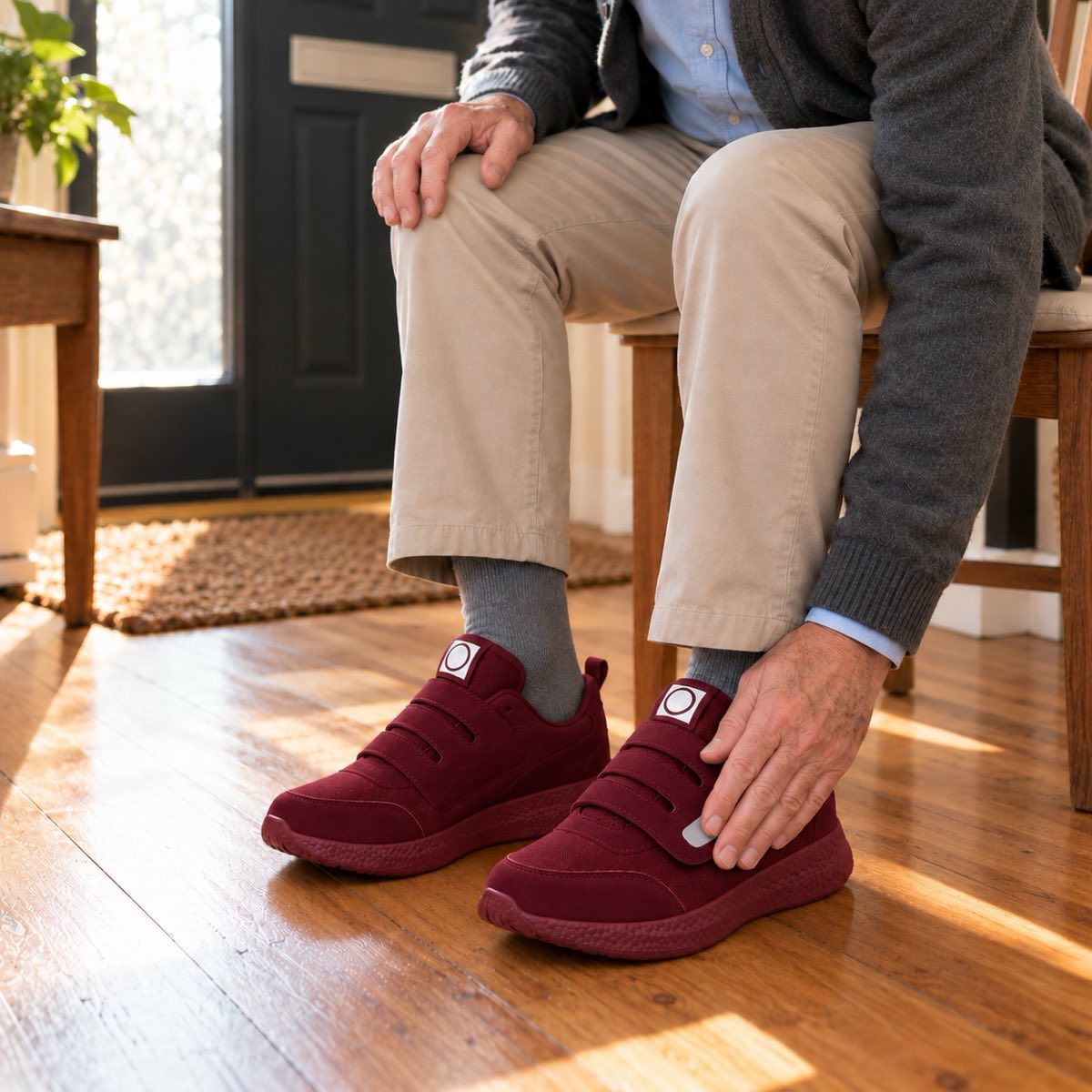
- Press it closed with one hand. A flat palm is enough. No pinching, no tying, no threading. It closes only as far as you set it: zero compression, and a custom fit every time you put them on.
The part nobody talks about: shoes that get tighter by afternoon

Here is something many people are not told. Parkinson's UK says "swelling is a common problem for people with Parkinson's," and ankle swelling is also a side effect of some Parkinson's medication.
When it happens, shoes can "feel tighter than usual," and Parkinson's UK suggests "footwear that can be loosened during the course of the day."
That is exactly what one strap lets you do. Close it snug in the morning. Ease it a notch in the afternoon, with one hand. Same shoe, same size, no laces to retie.
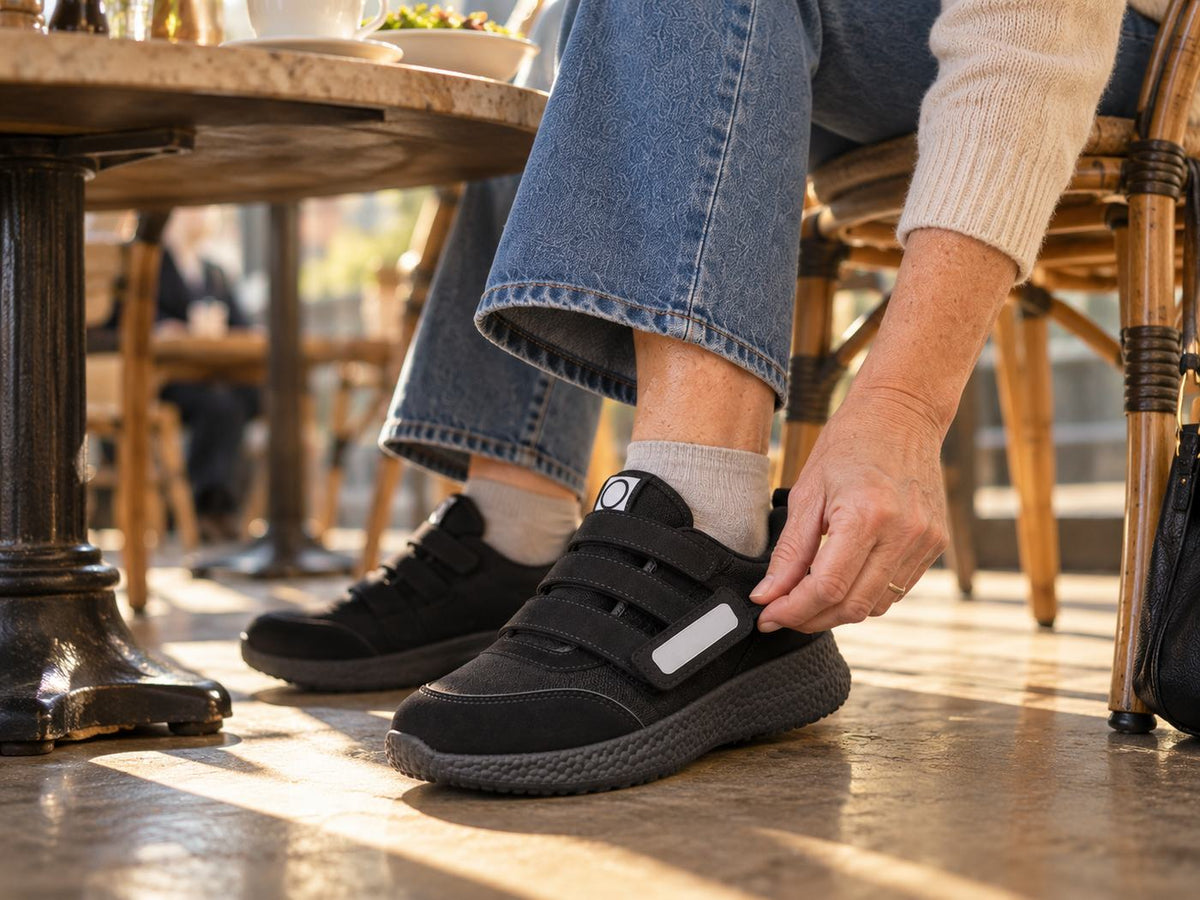
It does not look like a medical shoe
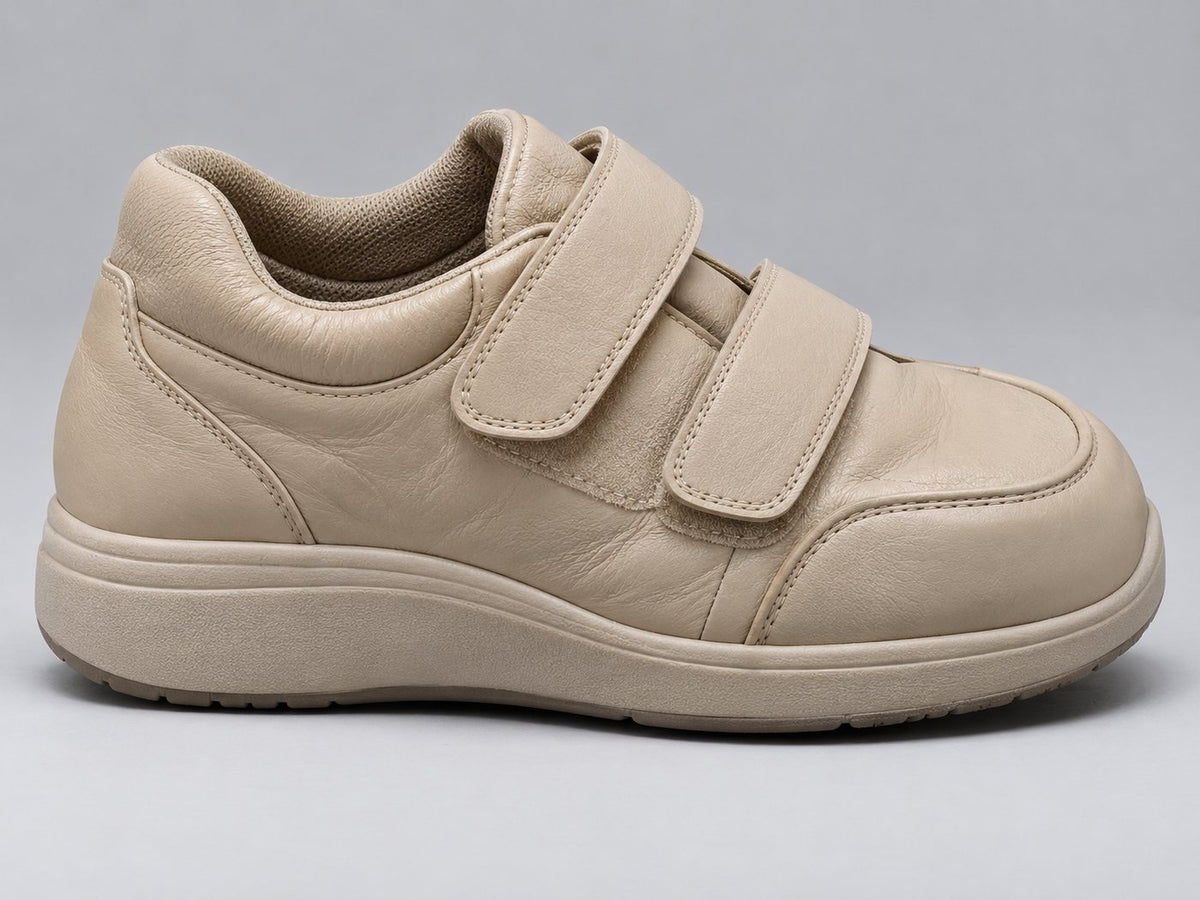
For years, "easy" shoes have looked the part: beige, bulky, a strap that says "special footwear" from across the room. Easy to put on, but nothing you would choose to be seen in.
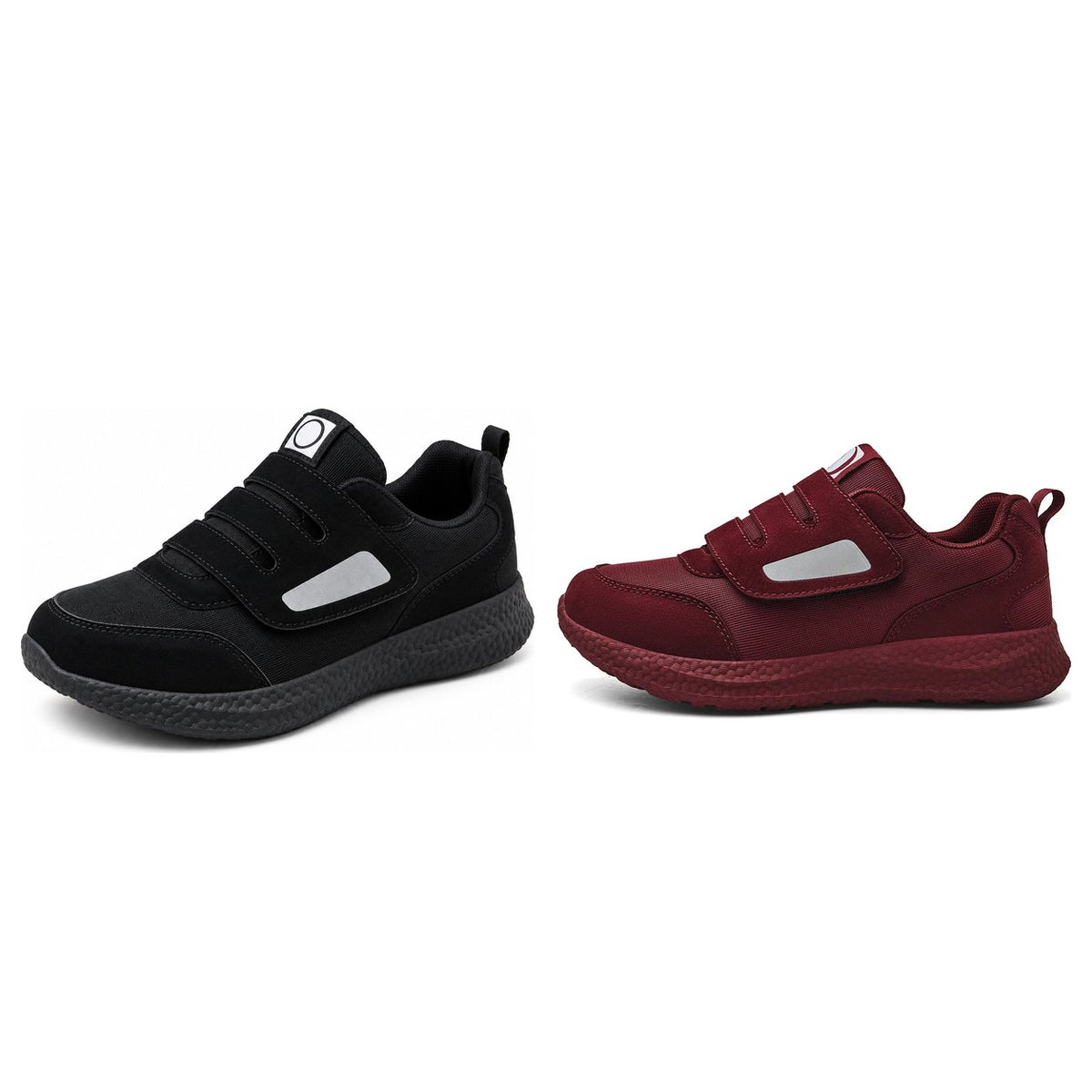
The EasyWrap comes in solid black or deep maroon, with a clean upper and a strap that reads as a design detail. It looks like the sneaker you would wear to lunch, the store, or a family dinner, because that is what it is.
Underneath: a breathable upper, a thick foam sole, and a reflective panel on the strap for walks at dusk.

Why not elastic laces or a shoehorn?

Elastic laces help some people. But they have to be threaded through every eyelet, by hand, which is the very job your fingers find hard. And the APDA notes they work by "easily converting Oxford shoes to slip-ons." A slip-on is the shoe Parkinson's UK says holds your foot less well.
A long shoehorn is one more thing to keep by the door and find when you need it. Collapsing-heel step-in shoes are clever, but their heel is made to fold under your foot. The EasyWrap keeps a firm heel and moves the opening to the top instead.
And where specialist shoes for wide feet typically cost around $119, the EasyWrap is $89.99, sold only on this website.
One roomy wide fit, in your usual size

This EasyWrap comes in one roomy wide fit, so there is no width to work out. 11 sizes, US women's 5 to 14 and US men's 4 to 14, each labelled in US women's, US men's and EU.
Order the size you usually wear. Do not size up: a bigger size only adds length, and the heel slips. The deep, extra-wide toe box and the strap do the rest.
Try them on the hard mornings and the good ones.

EasyWrap Wide Fit in black or maroon. If they are not the easiest shoes you have put on in years, send them back within 50 days for a full refund. Shipping in the US is free and takes 3 to 5 business days.
Want both colors? Tick the box by the button and a second pair comes in the other color, same size.

Nutelix EasyWrap Wide Fit Shoe
One strap opens the whole top. Step in flat, press it closed with one hand. No laces to tie, nothing to thread, and it looks like an everyday sneaker.
- Opens up to 2x wider: step in flat, no forcing your heel
- Closes with one hand: no pinching, no tying, no threading
- Low, wide heel: firm at the back, strap over the top close to the ankle
- One roomy wide fit: 11 sizes, black or maroon, about 450g a pair
Opens up to 2x widerStep in flat, then press the strap closed with one hand, as snug as you like.
- Free US shipping, 3 to 5 days
- 50 days to return
- Secure checkout
Before you order
What size should I order?
Is this a medical shoe?
I've seen shoes like this before. What's different?
Only sold here. Not on Amazon, eBay, Etsy or any other platform.

P.S. If putting on shoes has become the slowest part of your morning, start there. One strap, one hand, and out the door.
Questions readers ask
Can I close the strap with one hand?
Yes. It presses closed with a flat palm, like any Velcro-style shoe. No pinching, tying or threading.
Do I need to bend down to put them on?
You need to reach your foot to press the strap closed, so sit on a firm chair. There are no laces to tie and nothing to thread.
Will they stay on my foot?
The strap closes over the top of your foot, close to the ankle, as snug as you like, and the heel is firm. The shoe is held from the top, not only at the heel.
Do they have a low heel? How heavy are they?
A low, wide heel. And they are light: about 450g for the pair.
My ankles swell later in the day. Will they still fit?
Ease the strap a notch. It opens wider and closes looser whenever you need it to.
What size should I order?
Your usual US size. It comes in one roomy wide fit, so there is no width to choose. Every size shows US women's, US men's and EU.
Can I get one pair in each color?
Yes. Tick the second-pair box by the button: the second pair comes in the other color, same size.
What if they do not work for me?
You have 50 days to send them back.